


UtilityCloud is a flexible physical asset management platform used by municipal governments and utility providers to manage their infrastructure. The platform allows users to create digital representations of real-world assets — fire hydrants, sewage pipes, water meters — and define the relationships between them. Teams can submit workflow reports against those assets to log maintenance, inspections, and repairs.
The Orleans Water Department uses UtilityCloud to manage their water supply infrastructure. They also use Beacon, a separate monitoring application that tracks real-time data from water meters in the field, including usage reads and leak detection.


The Orleans Water Department needed these two systems to talk to each other. Beacon was collecting valuable data from water meters every day — reads, usage patterns, leak alerts — but none of that information was making it into UtilityCloud where their team actually manages assets and assigns work.
Without an integration, the department had two separate systems with no bridge between them. Meter data lived in Beacon. Asset records and work orders lived in UtilityCloud. If a leak was detected, someone had to manually check Beacon, then go into UtilityCloud to create a work order. New meters had to be entered by hand. Daily reads weren't being recorded in the asset management system at all.
UtilityCloud's engineering team scoped the integration at 12 to 15 weeks of development time from a senior engineer. That's a significant commitment for any team, especially when the product roadmap is already full.

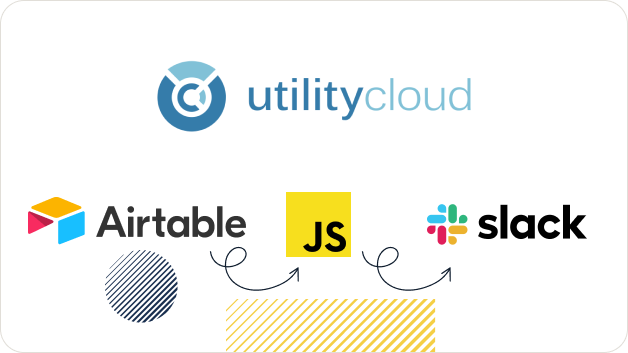
XRAY built a comprehensive integration between Beacon and UtilityCloud using Airtable, Slack, and custom JavaScript scripts, delivering the full solution in just four weeks — including testing.
The integration covers three core workflows:
When a new water meter is installed or an existing one is replaced, the automation creates the meter as a child asset of its corresponding Service Asset (the building it's connected to) in UtilityCloud. If the Service Asset already exists, the new meter is paired with it. If not, a new Service Asset is created first. When a meter is replaced, the old one is removed from the system. This keeps UtilityCloud's asset hierarchy accurate and up to date with the static data that defines each meter — IDs, locations, and parent-child relationships.
Every 24 hours, the automation checks Beacon for new meter reads and stores them as workflow reports in UtilityCloud. Each report includes all of the data that a field report from a physical location would contain. This gives the Orleans Water Department a continuous, automated record of meter activity without anyone needing to visit a meter or manually enter a reading.
Every 24 hours, the automation also checks Beacon for newly detected leaks. When a leak is found, the system automatically creates a workflow report in UtilityCloud with a rough template for the investigation and sends a Slack notification so the team knows immediately. Work orders are assigned and ready for a technician to pick up, rather than sitting in a queue waiting for someone to notice an alert in a separate system.

By using Airtable, and custom JavaScript instead of traditional development, XRAY delivered a production-ready integration in 4 weeks — cutting the original 12-to-15-week engineering estimate by over 70%. That's months of senior engineering time freed up for UtilityCloud's product team to spend on their core platform.
More importantly, the integration runs continuously. With over 4,200 automation runs per week across all three workflows, the Orleans Water Department now has a fully automated pipeline between Beacon and UtilityCloud. Meter data flows in daily. New meters are added to the asset hierarchy as soon as they're installed. And when a leak is detected, a work order is created and assigned automatically — no manual handoff required.
The result is a system where real-time field data and asset management live in the same place, giving the department a complete picture of their water infrastructure without the manual work that used to sit in between.

Coming into this implementation, we were estimating 12 to 15 weeks of development from a senior engineer on our team. XRAY came in and solved this problem in four weeks, including testing. The way they used low-code tools was unlike anything I've ever seen in my 20 years managing developers. They are truly experts in their craft.