
Most people judge AI by one question: was the answer good?
If you're trying to build AI into how your company actually operates, that's the wrong question. The real value isn't just getting a good answer when you ask for one—it's several things getting done at once, without anyone asking at all.
AI has completely changed the world of automation. Tasks that could only be completed by humans just a couple years ago can now be easily handed to AI.
Picture a meeting. Normally you've got people half-listening while they type notes. Now nobody has to.
AI builds the transcript, captures the tasks, and writes the summary in the background, while everyone in the room focuses on the actual conversation. With the right setup, all of that lands in your team's software automatically.
That's the shift. Here's how to make it.
There's one concept that changes how you think about every AI tool you use, and it comes down to data.
A meeting transcript is unstructured data: a long block of people talking, with no shape to it. A resume, a contract, a pile of call notes—all of it starts out messy.
AI's real job is turning that mess into structured data, like a task or a record in a database.
Structured data means individual objects with traits attached.
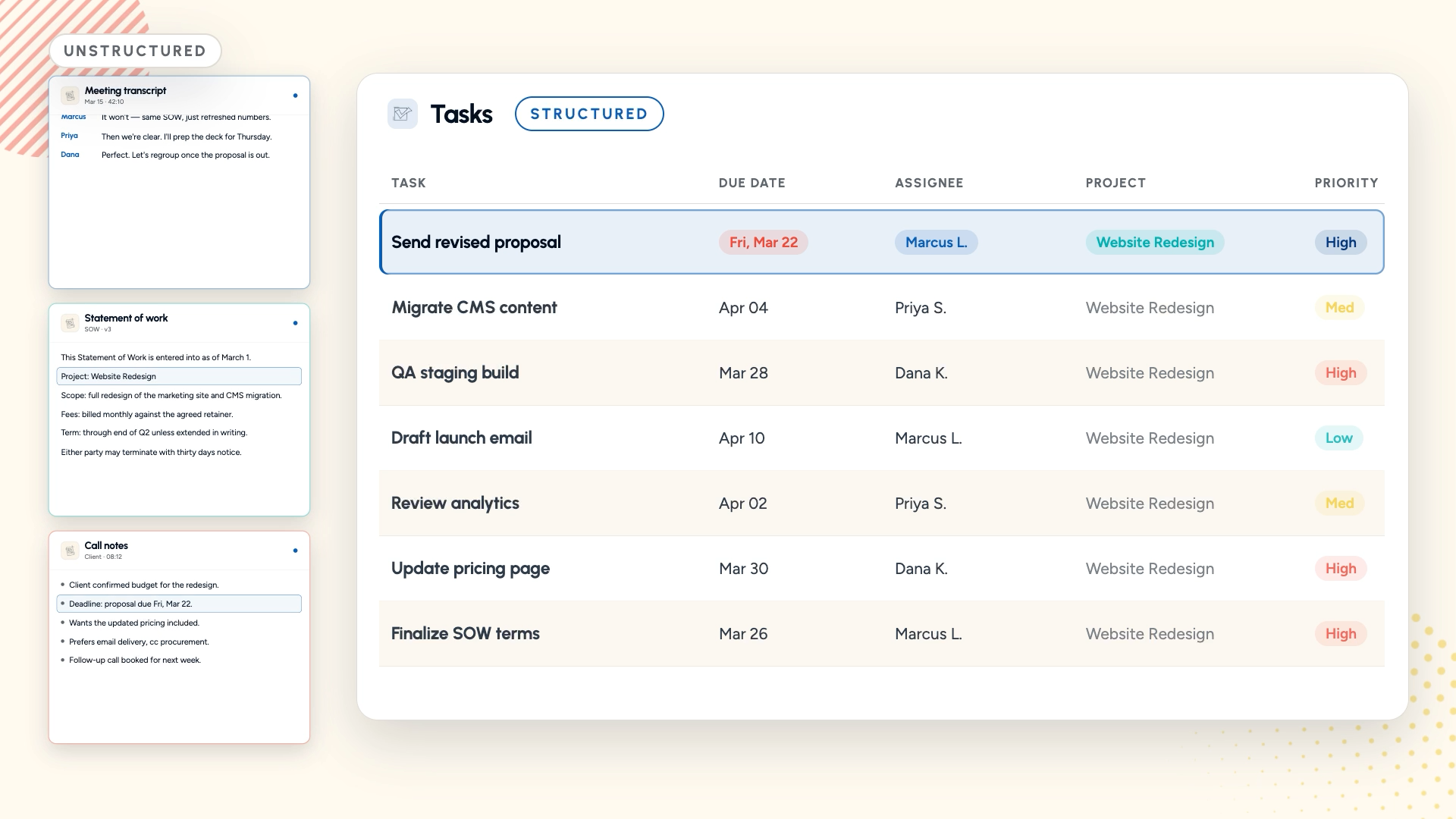
These individual, labeled traits make structured data easy to read for other software and automated systems.
For instance, each task has:
• A due date
• An assignee
• A related project
• A priority, a status, whatever else you need
All of that already exists inside the transcript; it's just buried and scattered across the conversation.
And that's exactly where AI shines, because you cannot programmatically find tasks in a transcript. Your only options are manual human effort or an AI prompt.
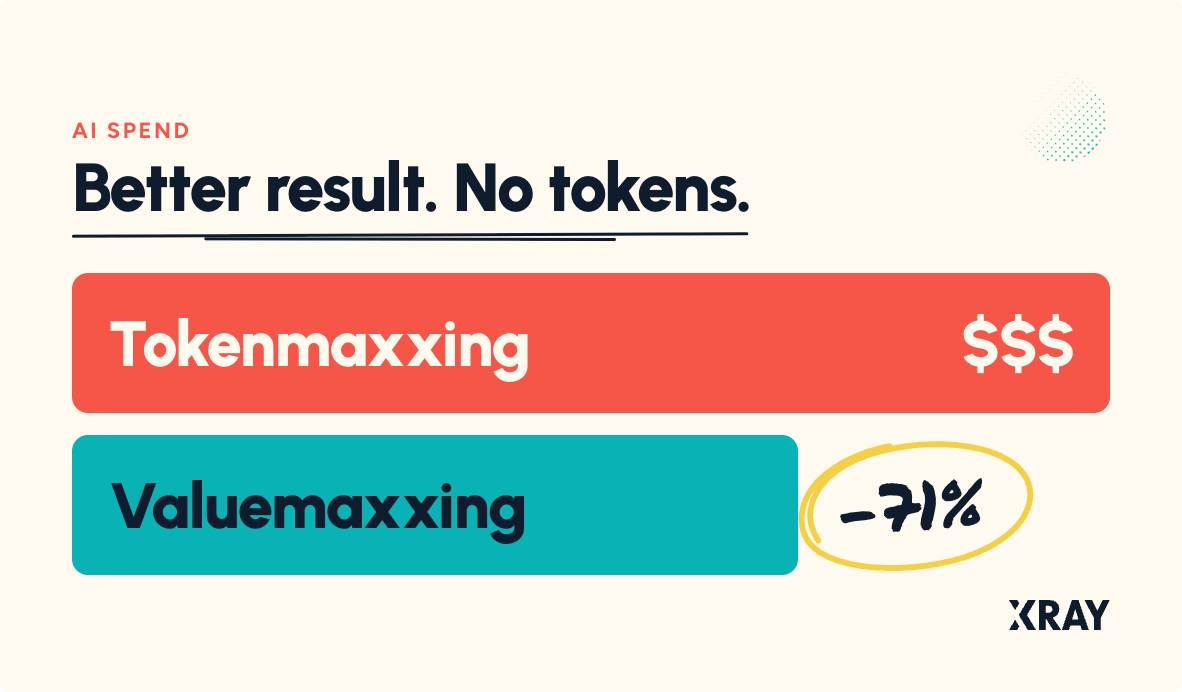
Here's the part people miss: once something is structured, it doesn't need AI anymore. It can be searched, sorted, and visualized instantly, without burning time or tokens sending it back through a model.
That's the whole game. Take something messy, make it structured, build on top of it.
We were recently talking with an operations executive who wanted to evaluate inbound sales leads.
She'd been trying to get more out of AI, so she used it to build a scorecard: company size, industry, budget signals, urgency.

She had ten leads from the week, pulled from web forms and LinkedIn messages, all messy and inconsistent. She pasted them into one prompt, asked for a score on each, and got back a ranked list with a clear top pick.

Then she looked at the top pick and something felt off. This wasn't the lead she'd have chosen.
Maybe the company was too small; maybe the timeline felt soft; maybe she just had a read on that industry the criteria didn't capture. She decided the AI got it wrong, closed the tab, and went back to sorting the next batch by hand.
When people get an unsatisfying answer from AI, the temptation is to stop there.
But the mismatch isn't a failure. It's data.
If the AI's top pick doesn't match your gut, that tells you something real: either your criteria are missing a factor that matters, or the scorecard is weighing something too heavily. That's a tuning opportunity.
However, writing one-off prompts isn’t an efficient way to adjust your instructions into something repeatable, and certainly doesn’t help you to automate the work entirely.
But the fix isn't complicated. It just takes a little leveling up.
This is where we all start with a new AI-assisted workflow. You paste in the raw material, describe what you need, and get your answer back—in this case, a lead score.

It works, and there's nothing wrong with it as a first step. But it has no memory – every new batch means retyping your criteria, and if you phrase it even slightly differently, you get slightly different results.
Nothing you build at level one is reusable.
This is where the loop starts.
Take the scorecard that worked and save it, along with your instructions, as a project in Claude or ChatGPT.

Now every new batch of leads goes into that project instead of a blank chat. It already knows your criteria; it already knows what a good lead looks like for you specifically.
And when you spot a mismatch, you don't shrug and move on. You go back into the project and adjust the instructions—or just ask Claude to update them for you.
That fix carries forward. Every future batch benefits from it.
A project is still tied to you: it sits in your account, and you have to be inside it to use it.
A skill in Claude takes that same scoring process and packages it so it runs inside any conversation.

It's also easy to share with your team. Now your sales rep runs the exact same evaluation you built, with the exact same criteria, without needing to know how any of it works underneath.
That's the difference between you knowing how to score a lead well and your whole team scoring leads well. It's the same shift as writing down a process so someone else can follow it—except the AI is doing the following.
Note that skills are specific to the Claude platform.
However, the next level is universal.
With fully automated AI using any platform, a person doesn't have to do anything but click a few buttons.
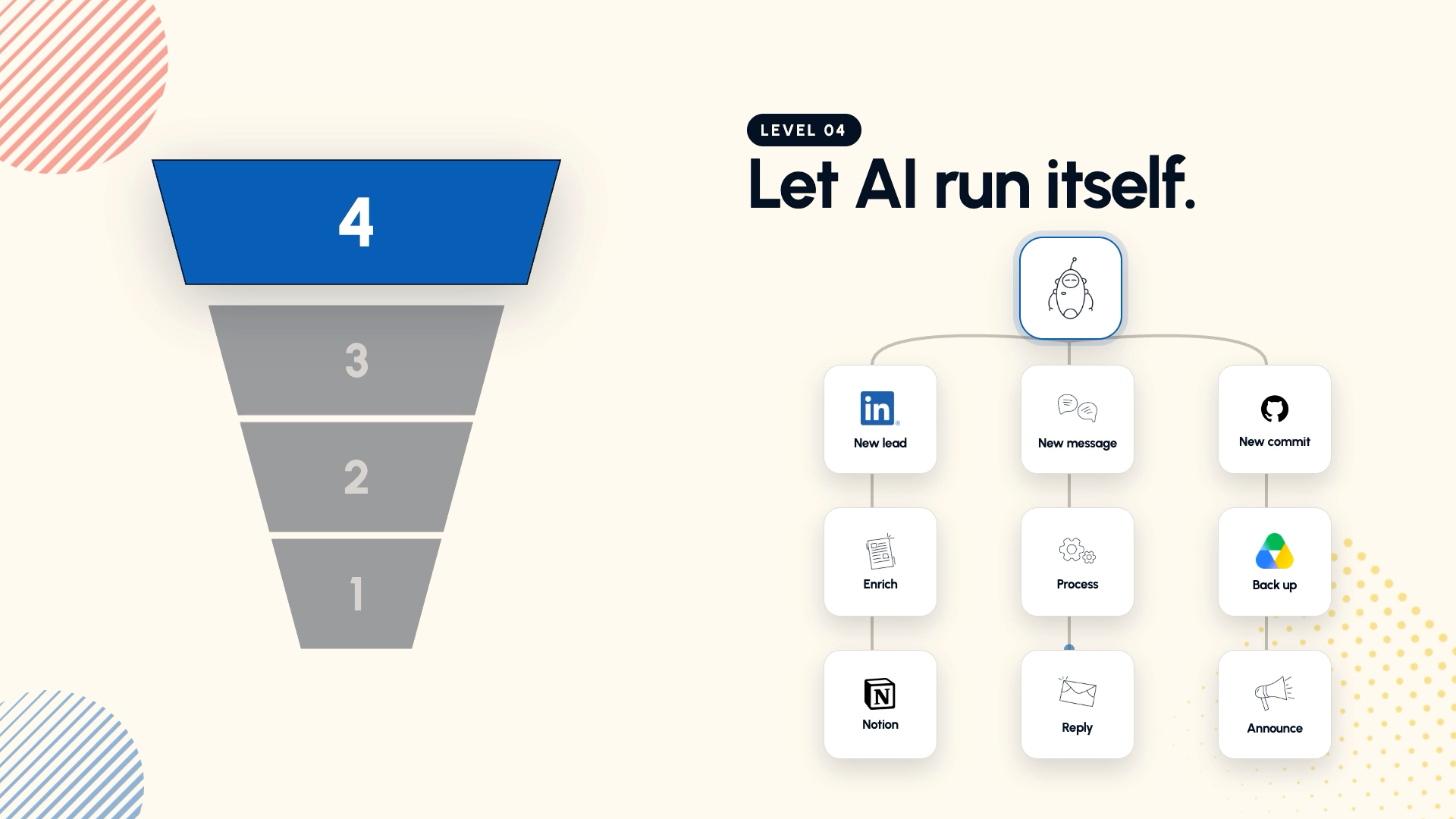
A lead fills out a form on your site or replies to a LinkedIn message, and that information lands directly in a structured record. The scoring runs automatically, using the same criteria you've been refining since level two. If it clears your bar, a notification goes to the right person with the score and the reasoning attached.
Nobody opened a chat. Nobody pasted anything in. The loop ran itself.
Here's what ties the four levels together: at every stage, when something looks wrong, you don't throw it out. You go back and tune the instructions—the same instructions that are now working at every level above.
That's what makes it a loop instead of a task. It gets sharper the more you use it, and you never start over.
Once you're at level four, your lead data flows automatically from your website or your inbox into a system that scores it and acts on it without anyone touching it.
That's powerful. It also raises real questions:
• What exactly does that system see, and what is it connected to?
• Who can access it?
• What happens when something goes wrong?
Those are valid concerns. They aren't a reason to avoid building it; they're a reason to build it correctly.
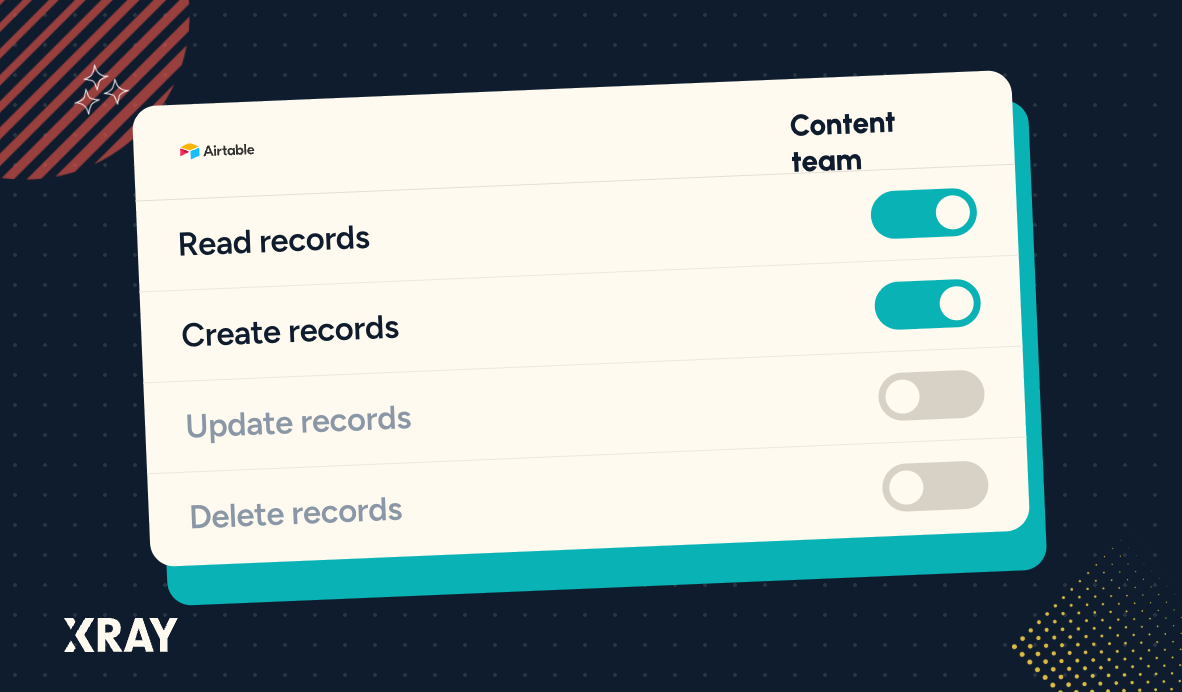
AI should only see the data you specifically approve. Nothing more.

Your team, and any agents they use, should only work through connections you've approved and can see. Access gets defined on purpose, not left open by default.
That's exactly how we build at XRAY. We help leadership teams set up loops like this one with the right guardrails in place, so the system runs safely without you giving up control of your data.
Learn more about our enterprise offerings at xray.tech/monthly
Stop measuring AI by whether one answer was right. Start measuring whether the system gets better every time you use it.
Your job isn't to score every lead by hand, forever. It's to build the loop, watch what it gets wrong, and tune it.