

A free, open-source AI agent tool just overshadowed every major AI company in the space. OpenClaw lets you run AI agents directly on your computer – not chatbots, but tools that actually do things.
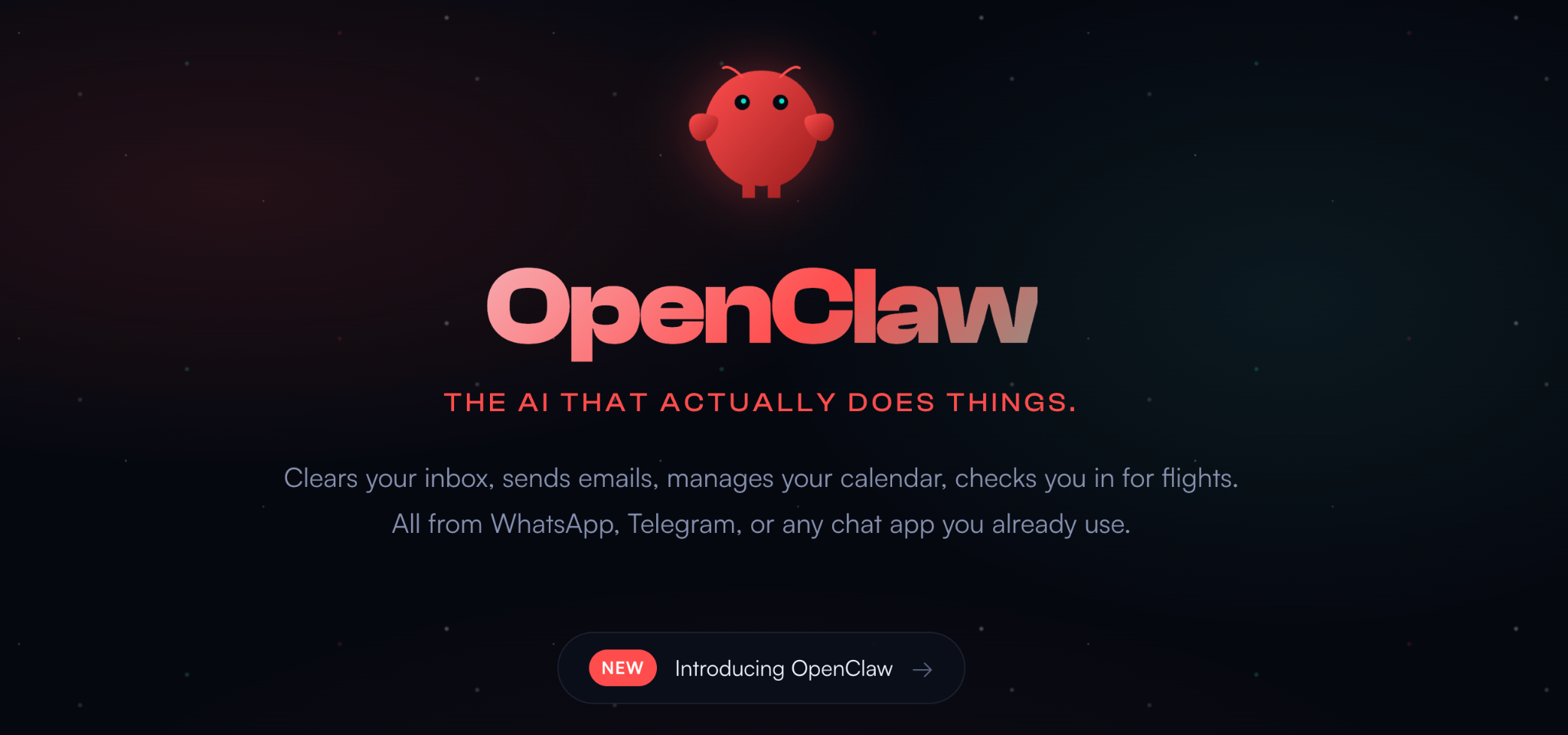
OpenClaw agents can manage your calendar, order things online, book appointments, and a lot more.
Mac minis are selling out as users are snatching them up to use as AI servers. Developers are building real tools with it.
But security researchers are sounding alarms.
Here's what you need to know before you install anything.
OpenClaw runs locally on your machine. If you have an account with an AI provider like OpenAI or Anthripic, it can use their AI models combined with full system access to your computer.
Instead of using a standard chat interface, you can talk with your OpenClaw agent through messaging apps like WhatsApp or Telegram, and it has persistent memory across conversations.

The appeal is obvious. You tell it what you want done, and it handles the execution. No manual clicking through interfaces. No copying and pasting between apps. It can browse the web autonomously and there's a marketplace of skills to extend what it can do.
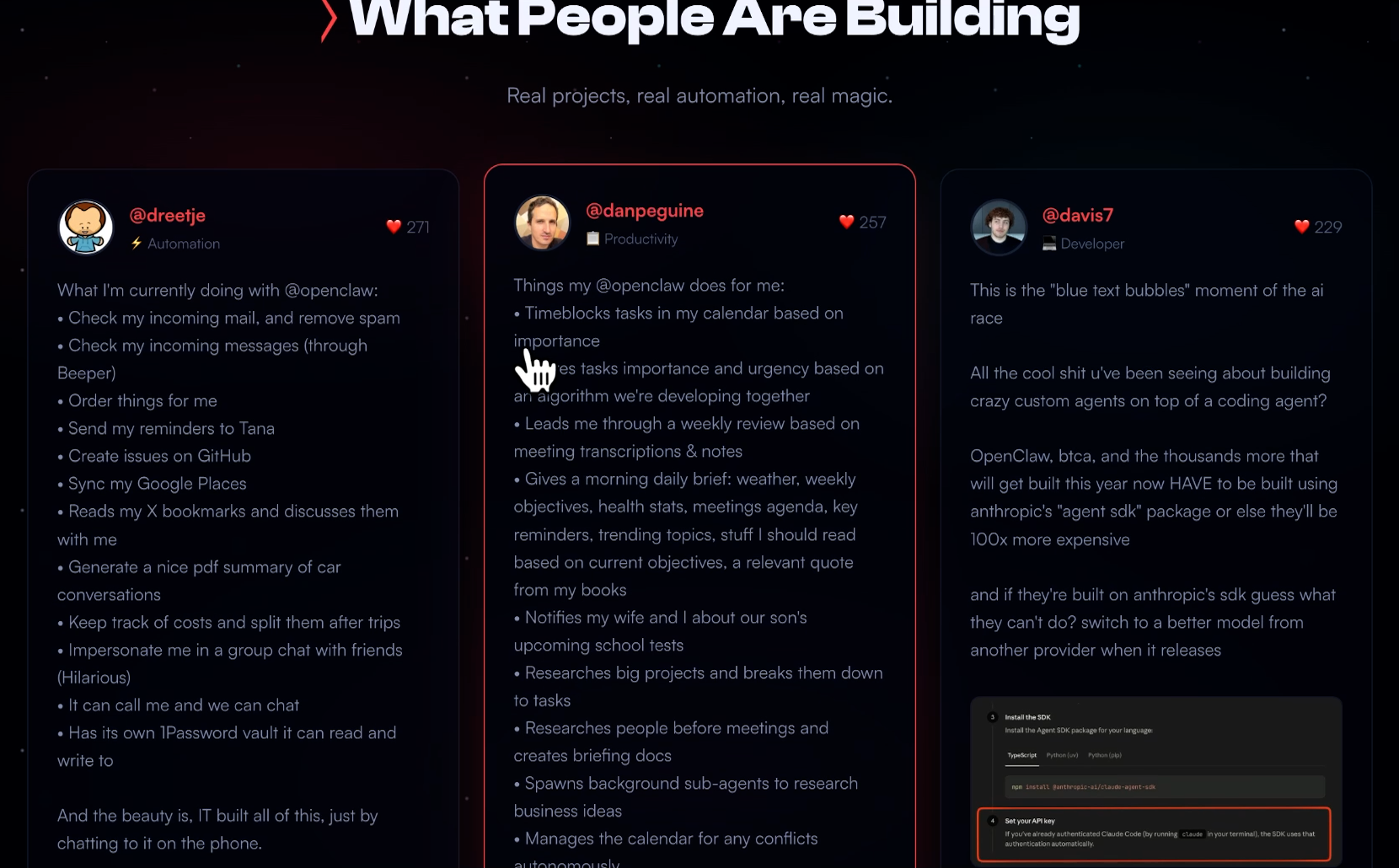
This is the kind of automation that actually saves time – but there is a massive downside here.
Protean Labs did a security audit of OpenClaw, and the findings aren't encouraging. Over 1,400 systems built with OpenClaw have configurations that leak DNS information.
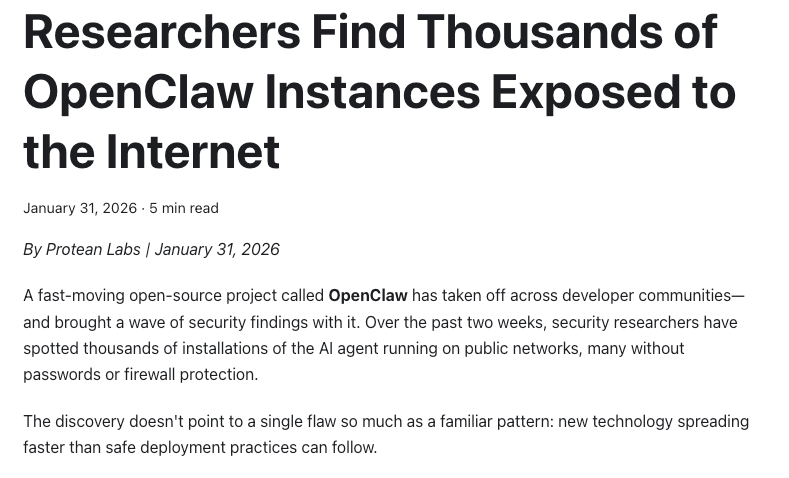
API keys are often stored in plaintext, which means if someone compromises your OpenClaw installation, they get access to every system it connects to.
And malicious users gaining access to OpenClaw is a very real concern.
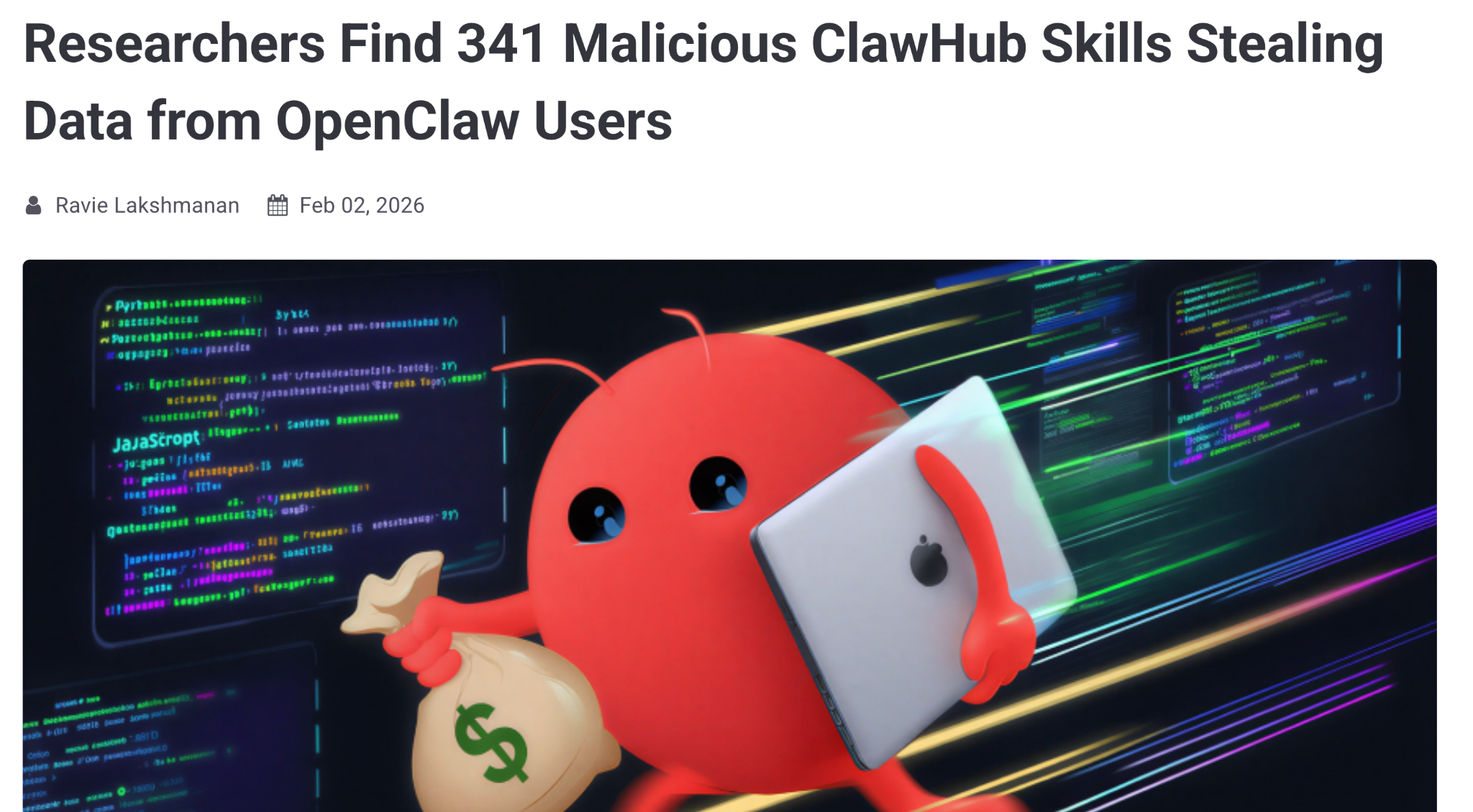
On the skills marketplace, users can upload plug-ins that expand OpenClaw with new functionality. Koi Security found that, as of February 2nd, the skills marketplace has 341 malicious skills – that's 12% of everything available.
More than one in ten of the skills that users can download are smuggling in tools designed to steal your data.
And if your AI agent is compromised, the risk goes far beyond a situation like clicking on a phishing link in an email. With OpenClaw, your autonomous AI agent could end up wandering the internet unsupervised and exposing your entire system.
OpenClaw points to where AI automation is headed – independent, autonomous agents that actually complete tasks without constant supervision. But it's not ready for business use yet, especially not for anything connected to important data.
The risk isn't theoretical. Your AI could expose client information, financial data, and access credentials. Everything on your machine becomes vulnerable. Early adoption has value, but bleeding edge means you bleed when it cuts.
AI agents like OpenClaw will transform how work gets done, and that transformation is coming soon. Just not today.
The concept is sound. An AI that schedules appointments, orders products, and builds tools without you touching anything is exactly the kind of orchestration that replaces manual work. But only when it's secure, stable, and doesn't put your entire operation at risk.
Most businesses don't need to be beta testers for experimental AI tools. The automation tools that exist today are powerful enough. Zapier, Make, n8n, and Airtable, combined with AI APIs from OpenAI, Anthropic, and Google, let you build sophisticated workflows that actually run in production.
These tools have been tested. They have security protocols. They integrate with systems you already use.
At XRAY, we design AI and automation systems for businesses that want the benefits without the bleeding edge risk. We use proven tools to build workflows that save time, reduce errors, and scale with your needs.
If you want to explore what AI can do for your business right now, reach out to us and schedule a free call. We'll show you what's possible with today's technology, implemented safely.
The future of AI agents is exciting, but you don't need to put your business at risk to prepare for it.